Current: North America
Regional Websites: South Africa
United Kingdom ![]()
Current: North America
Regional Websites: South Africa
United Kingdom ![]()
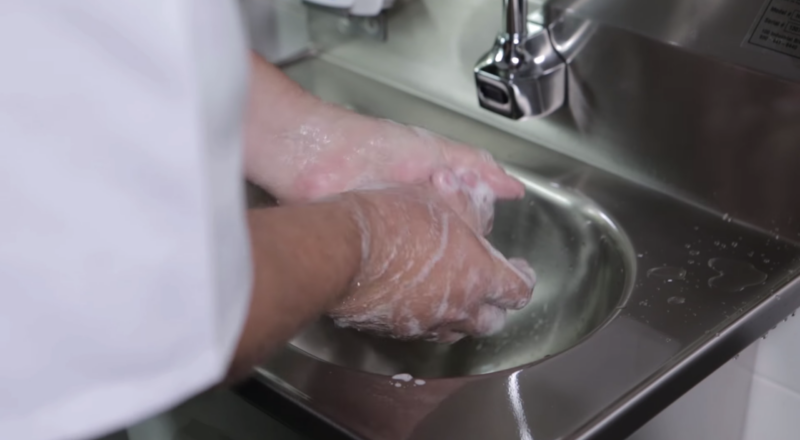
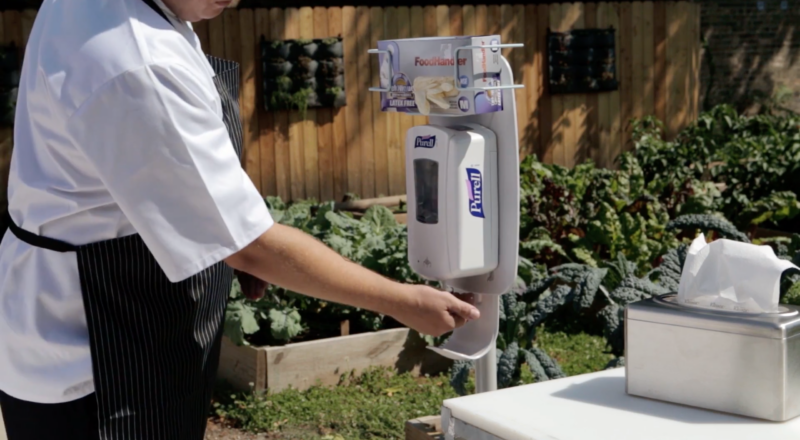
SaniTwice is the hand cleansing protocol for use where water is not readily available or in too small a quantity to yield a good handwash, log 2 pathogen reduction. Two rounds of research at BioScience Laboratories in 2008/9 demonstrated positive results in light to moderate soil situations (beef broth).
A third evaluation was conducted following discussions with regulatory representatives. Their advice was to check performance on heavy soil (ground beef), providing an even greater margin of safety for this new intervention. This has now been completed and the preliminary results look very promising. Final results will be presented here as soon as the full laboratory report is available.
This research study is yet another in a growing body of scientific evidence supporting the efficacy of the Sani-Twice approach, and which is being assembled for journal publication. Field tests started in the desert of the Mid-East, solving a military foodservice issue, and were followed by a successful two-year study under the guidance of the Southern Nevada Health District (SNHD).
SaniTwice solved another issue for local schools in Las Vegas by providing an alternative hand cleansing method for use during water outages.
Feedback please. Comments are requested in order to verify and modify for future iterations Thank you!
The ServeReady Regimen Selector gives operators a comparative risk-based look at a range of hand hygiene interventions to better align with the operation's customer base, menu, staff (span of control), facility and management's tolerance for risk. Supporting research is outlined below.
On the vertical axis is the log reduction scale and each bar represents the effectiveness of a specific intervention. A log 1 represents 90% removal or kill while log 5 is 99.999%.
This hand hygiene menu facilitates an integrated look across the entire operation to match the risk with the right intervention.
read more »
Ethnic considerations along with language proficiency must be factored into foodservice hand hygiene training programs. All food handling staff must be aware that “Failure in hand hygiene systems is the number one contributing factor in foodservice outbreaks.” according to Jim Mann, executive director of the Handwashing For Life Institute. Dr. D. Pettit of the World Health Organization (WHO) reflects a supporting view in his healthcare work where he considers hand hygiene as the most effective tool in preventing cross-contamination and lowering HAI, hospital acquired infections.
Within the foodservice industry, public health officials, lead by the Centers for Disease Control and Prevention, agree that regular handwashing is the most effective defense against the spread of foodborne illness. It is the responsibility of foodservice management to offer effective hand hygiene facilities complete with best practice protocols, products and training in order to keep their customers and workforce safe
Handwashing training involves not only education, but also behavior modification and constant reinforcement. Training is challenging even with a receptive group of trainees, however, adding the extra obstacle of differing cultural and religious attitudes into the mix, makes influencing attitudes and changing behaviors an even tougher task.
According to a 2008 study conducted by the WHO, hand hygiene is strongly influenced by religious faith and potentially affects compliance. Although this and other published studies focused on healthcare settings, one can assume that religion and culture influences hand hygiene in the foodservice sector in a similar fashion. With a growing influx of immigrants from India, Pakistan and the Middle East, Muslim religious and cultural traditions must be taken into consideration when formulating best practices in hand hygiene within the foodservice industry.
Islam places great emphasis on physical and spiritual cleanliness. The Qu’ran offers specific instruction on when and how hand cleansing should occur. These include before prayer (5 times a day), before and after meals, after using the toilet, after touching a dog, shoes or cadaver, and after handling anything soiled. Compared to most other religions, these rules are quite specific and stringent. More importantly, these rules are followed by the majority of Muslims, not just those who consider themselves ardent followers or overtly religious. One reason for such compliance is that hand hygiene patterns are usually established within the first 10 years of life and become ingrained behavior. With such specific instructions from the Qu’ran and a high rate of compliance, one would assume hand cleanliness among Muslim workers within the healthcare and foodservice setting would not be an issue. However, although Islam teaches its followers that cleanliness is vitally important, other Muslim practices may increase the risk of cross contamination and illness transmission.
A common popular belief in the Muslim (and Hindu, Jewish and African) culture is that the left hand is considered unclean as it is used for hygienic cleaning, while the right hand is used for eating. Although toilet paper is widely accepted and used, culture dictates that Muslims should clean their private parts after bathroom use with their bare left hand. This practice is obviously problematic, as even vigorous post-bathroom hand washing often doesn’t remove all potentially illness-causing pathogens. Additionally, many Muslims don’t like to use utensils to eat and prefer to use their bare hands. Again, although the Qu’ran instructs individuals to wash before and after eating, it is almost impossible to wash away all risk. Perhaps the greatest obstacle foodservice and healthcare management may face when trying to ensure compliance with hand hygiene standards within the Muslim workforce, is their reluctance, and often refusal, to use the gold standard in convenient hand disinfection - alcohol based hand sanitizers.
Alcohol hand sanitizers are considered an adjunct to handwashing and are increasingly used in both foodservice and healthcare to maintain hand cleanliness standards between wash cycles. Using hand sanitizer without a preceding handwash, preferably with a nailbrush, is totally unacceptable after defecation or any use of the restroom.
Although the Qu’ran specifically forbids the use of alcohol, it permits the use of any manmade substance to reduce illness or contribute to improved health, including alcohol used for disinfection. In fact, the Muslim Judicial Council of South Africa has issued written permission regarding the use of alcohol not produced as a result of fermentation for the specific purpose of disinfecting the hands. In addition, due various health concerns during Hajj (religious pilgrimages to Mecca and Medina), in 2002 the World Muslim League in Mecca issued a fatwa allowing the use of alcohol based hand sanitizers. During this year’s Hajj, Saudi Deputy Health Minister Dr. Ziad Memish reiterated that Saudi senior religious leaders deem alcohol-based sanitizers acceptable. Despite these fatwas and their documented approval of alcohol based hand sanitizers, many Muslims still adhere to their conservative beliefs that all alcohol is unacceptable. Not only is the smell of alcohol on the skin disturbing, some fear that the alcohol in the sanitizers may be inhaled or absorbed into the skin causing intoxication. read more »
Creating enduring hand hygiene habits start with "Mom" but typically end with the daily bad examples from those around us. The connection between clean hands and good health is soon eroded. Then an employee starts a new career in foodservice and the cycle is repeated.
Why wash? When? How and how often should I wash?
H1N1 has moved quickly around the world earning the designation of pandemic. Clean hands are once again the primary protection as North America braces for outbreaks in schools and the many away-from-home environments.
An effective defense against H1N1 starts with an assessment of your facility and the people who use it. Everything learned in fighting norovirus applies although keeping ill employees off the premises is considerably easier than keeping ill customers away.
While H1N1 is a respiratory disease, studies and experience have shown that donning masks outside healthcare settings offers little protection against direct airborne transmission. The Society of Healthcare Epidemiologists, the Infectious Disease Society and the World Health Organization recommend precautions based on transmission by droplet infection rather than airborne infection. In other words, this virus is transmitted more from surfaces and hands than directly via the air.
Aside from keeping your distance, which isn’t always viable, what can you do to lower the risk of H1N1 transmission among your employees and customers?
As the H1N1 virus is contagious beginning 1 day prior to the onset of symptoms, the following precautions are imperative each and everyday, whether or not you see signs of illness: read more »
Breakthrough Norovirus-effective Formulation Now Commercially Available
The use of Food Code compliant alcohol hand sanitizers in Foodservice has been suppressed for years by relatively low effectiveness on their number one cause of foodborne outbreaks, norovirus. Formulations deploying new synergists potentiate the alcohol base and more than triple its predesessor products' effectiveness. It is more than 10 times more effective than the thin liquid versions. The foodservice market now has a very effective and convenient option which is also skin friendly.
The scientists at GOJO® in collaboration with Dr. Moe at Emory University and Dr. Lee-Ann Jaykus at North Carolina State found ways to improve laboratory testing with this lab-unfriendly "non-enveloped" virus and develop formulations that work.
This first generation product was known commercially as Purell® VF447. It is Food Code compliant and formulated on a base of 70% ethyl alcohol. That version was recently replaced with VF481, known by some as Purell Ultra. It too is Food Code Compliant. Those operators most devastated by norovirus outbreaks, including cruise lines, are among the early adopters.
Actually it can be thanks to the diligence of operators, regulators and food service workers. Unfortunately, even with the best intentions not all food service is safe. The Five Faces of Foodborne Illness is based on USA statistics provided by the Centers for Disease Control (CDC) who also advise us that Handwashing is the single most important means of preventing the spread of infection. read more »
Everclean brings peace of mind to clients through our proven food safety and sanitation program. We provide customers with a full
spectrum of services that ensures compliance with the local health department.
read more »
The H1N1 Rap was written, composed, produced, and performed by John D. Clarke, MD, FAAFP. This music video is a fun, highly educational, and entertaining way to learn about prevention of the H1N1 virus. read more »
A completed or parallel ServeReady project is very helpful in steering a TouchReady implementation. This template lays out a game plan considering the objective, the resources, the culture and the business calendar. The integration of this initiative with projects competing for the same resources is critical. This plan must be revisited and updated regularly to retain its corporate priority through conclusion. read more »
This review of current practices yields a one page summary, affording the team an opportunity to assess strengths and weaknesses. It helps this multi-disciplined team identify potential risks and solutions prior to making any changes. An effective cleaning system with monitored standards is the goal. This must be defined prior to making decisions of efficiency and exploring “green” factors. read more »
This template is used for both regularly scheduled audits and the periodic review of cleaning cycles using ATP as the measure of cleanliness. ATP’s Relative Light Units (RLUs) define the cleanliness level and serve to set a numeric standard. A clean surface will rarely read zero. Variations will occur depending on swab patterns. Other report formats, including trend analysis, are available with the computerized Luminometer/Swab reader. read more »
TableReady™ narrows the focus of TouchReady™ to a cleaning sub-system specifically targeting the guest tables. It too is a risk-based process to set safe level standards and package implementation with training and monitoring. The core of TableReady™ is the marriage of cleaners with single-use paper towels – replacing the traditional multi-use rag, maintained in a bucket of poorly controlled sanitizer solution. Dr. Charles P. Gerba, University of Arizona, demonstrated that “in some cases the multi-use rag method just moves germs from one spot to another while giving staff and patrons an impression of cleanliness.” Adding cleanliness standards can change this picture and help operators move to the TableReady™ method where a spray bottle of fresh cleaner/sanitizer solution is used in conjunction with a single-use paper towel. read more »